Short answer
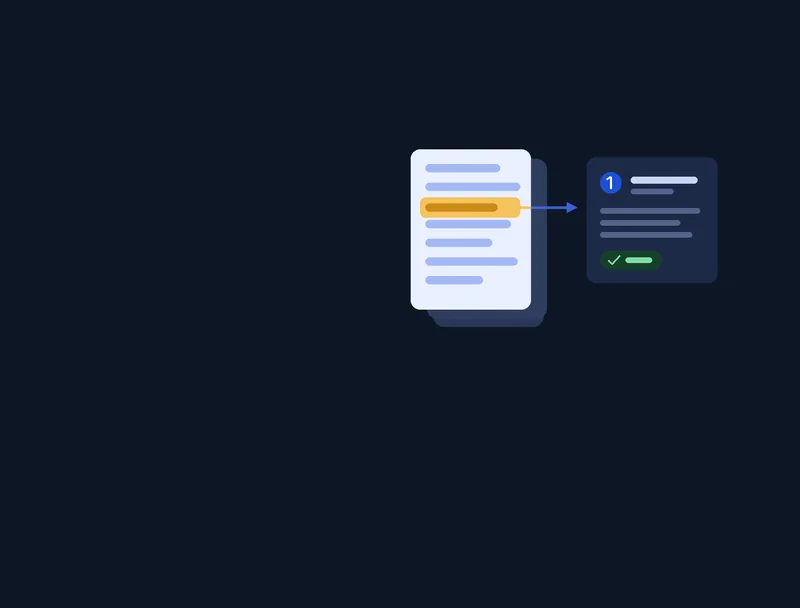
Use RAG when answers must come from documents that change, or must cite their source: it retrieves your content at answer time, with no retraining. Use fine tuning to change how a model behaves, such as its tone, output format or classifications. Most business systems start with RAG and add fine tuning only for behaviour.


| RAG | Fine tuning | |
|---|---|---|
| How it works | Retrieves relevant documents and passes them to the model at answer time | Trains the model further on your examples, changing its weights |
| Best for | Knowledge bases, document search, answers that cite a source | Consistent tone or format, classification, structured output |
| When your data changes | Update the documents; answers change immediately | Retrain to reflect new data |
| Traceability | Each answer can link to the passage it came from | Knowledge is inside the model, so answers cannot cite a source |
| Upfront effort | Indexing and retrieval setup | Labelled training data and training runs |
RAG vs fine tuning in one minute
RAG vs fine tuning is a choice between two ways of making a language model useful on your business. Retrieval-augmented generation (RAG) looks up the right passages from your documents each time someone asks a question and gives them to the model. Fine tuning trains the model further on examples so that it behaves differently. The idea behind RAG comes from the research paper Retrieval-Augmented Generation for Knowledge-Intensive NLP Tasks, and the major model providers document fine tuning in their guides, such as OpenAI's fine-tuning guide.
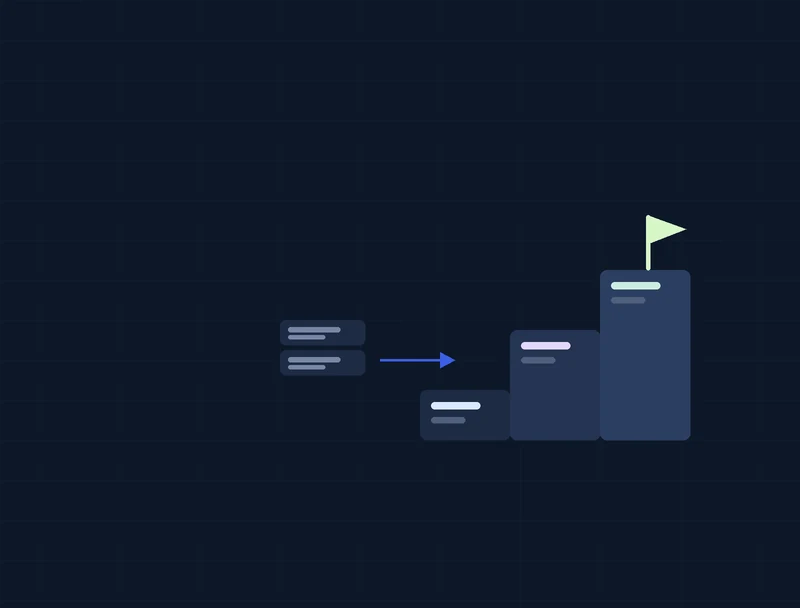
The practical rule is short. If the problem is knowledge, meaning the model needs facts that change or must be traced to a source, use RAG. If the problem is behaviour, meaning the model needs a consistent format, tone or classification, consider fine tuning. Most business systems start with RAG, and many never need anything else.
When to use RAG
Choose RAG when the answers depend on documents your business owns and changes. Typical cases are an internal knowledge base, a support assistant, policy and SOP search, contract review and proposal drafting. RAG fits because:
- Your content changes. Update the document and the next answer changes, with no retraining.
- You need sources. Each answer can link to the passage it came from, so a person can check it.
- Access matters. You can limit what each user can retrieve, which is hard to do once knowledge is baked into a model.
- You want to start quickly. You need good indexing and retrieval, not labelled training data.
RAG is only as good as its retrieval. If the system fetches the wrong passage, the model answers from the wrong passage. Most of the work in a good RAG system is in how documents are split, indexed and ranked, and in testing it against real questions. Our guide on how to build a RAG system for a company knowledge base covers those steps.
When to use fine tuning
Choose fine tuning when you want the model to behave in a particular way and you can show it many examples of the right behaviour. Common cases are classifying emails or tickets, producing output in a strict structure, matching a house writing style and handling specialised vocabulary. It suits stable, repeated tasks, because the examples you train on set what the model learns.
- You need consistent output. A fine tuned model can follow a format more reliably than a long instruction prompt.
- You have good examples. Fine tuning needs labelled data of the right quality, and collecting it is usually the hard part.
- The task rarely changes. If the rules change often, you retrain each time.
Fine tuning is a poor way to teach a model facts. A model trained on your documents can still get details wrong and cannot point to where an answer came from, so it does not replace RAG for knowledge questions.
Can you use RAG and fine tuning together?
Yes, and many production systems do. RAG supplies the facts and fine tuning shapes how the answer is written. A support assistant is a good example: RAG finds the right policy passage, and a fine tuned layer keeps the reply in the right format and tone. Add fine tuning only after RAG is working and you can point to a behaviour problem that better prompts and retrieval do not fix.
How to decide: five questions
- Do the answers depend on documents that change? If yes, start with RAG.
- Do people need to see where an answer came from? If yes, use RAG.
- Is the problem the model's format, tone or labels, not its knowledge? If yes, look at fine tuning.
- Do you have hundreds of good labelled examples? If not, fine tuning is not ready.
- Have you already tried clearer prompts and better retrieval? Do that before training anything.
Cost and upkeep
The costs differ in shape more than in size. RAG costs more in engineering up front (indexing, retrieval, testing) and then in running the search on every question. Fine tuning costs more in preparing training data and running training, and again each time the data or the base model changes. Whichever you choose, budget for testing against real questions and for monitoring after launch, because that is where most of the quality comes from.
A worked example
A legal team wants an assistant to find answers in its own documents. The answers must cite the passage, because a lawyer will check every one, and the documents change as new matters arrive. That is a knowledge problem, so RAG is the starting point, and fine tuning is not needed. The same approach sits behind our research and review assistant, where every answer links to its source.
From our work
Related: Generative AI and LLM development
Frequently asked questions
What is the difference between RAG and fine tuning?
RAG retrieves relevant passages from your documents at the moment a question is asked and gives them to the model. Fine tuning changes the model itself by training it on examples. RAG is about knowledge, and fine tuning is about behaviour.
Is RAG better than fine tuning?
Neither is better in general. RAG is usually the better first step for business knowledge, because content changes and answers can cite sources. Fine tuning is better for consistent format, tone or classification.
Can RAG and fine tuning be used together?
Yes. RAG provides the facts and a fine tuned layer controls how the answer is written. Add fine tuning only after RAG works and a behaviour problem remains.
Does fine tuning teach a model new facts?
Not reliably. It can pick up style and patterns, but it can still get details wrong and cannot cite a source. For facts that change, use RAG.
Does RAG need a vector database?
Usually, because a vector database finds passages by meaning. For small collections, simpler search can be enough. The right choice depends on how much content you have and how often it changes.
Is RAG safe for private company data?
It can be, with the right design: access control on what each person can retrieve, encrypted storage, logging, and only the retrieved passages sent to the model. Check where your model provider processes and stores data before you start.