Short answer
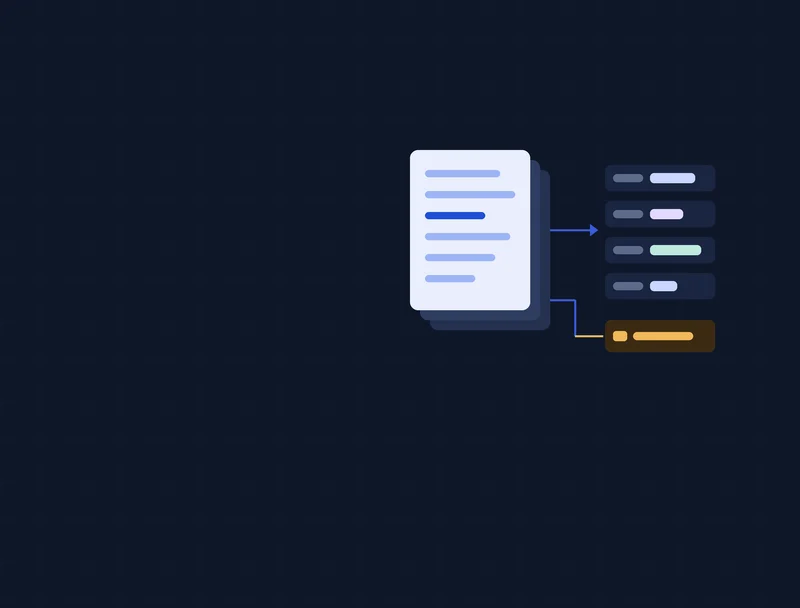
AI customer churn research uses a conversational agent to ask customers why they left, follow up on each answer, and turn hundreds of open replies into themes linked to the quotes behind them. It complements satisfaction surveys: scores show that something changed, conversations show why.

What is AI customer churn research?
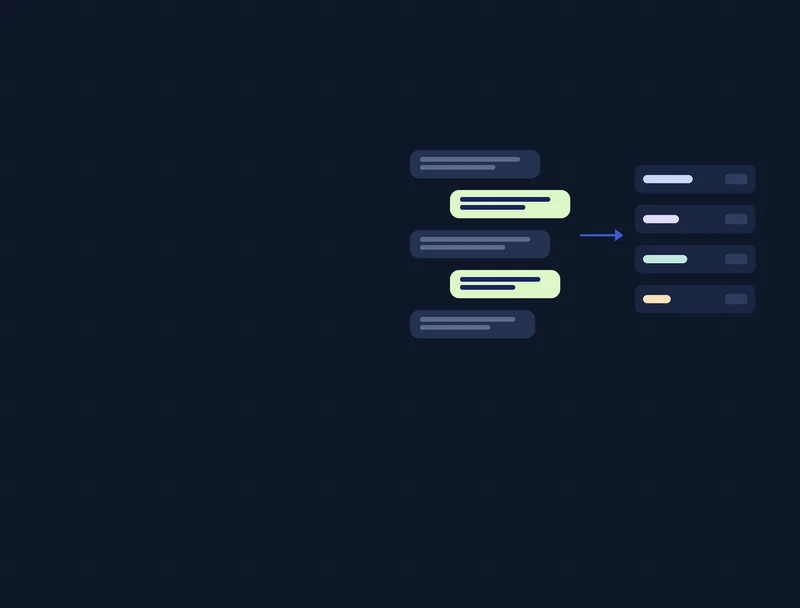
AI customer churn research uses a conversational agent to ask customers why they left or reduced spend, follow up on each answer, and turn hundreds of open replies into themes a commercial team can act on. Instead of a fixed survey, the agent works from a short brief and asks one relevant follow-up per reply, then a language model groups the answers and links every theme to the quotes behind it.
It sits next to your existing satisfaction surveys rather than replacing them. Scores tell you that something changed. Conversations tell you why.
Why surveys miss the real reason customers leave
Open text is where the reasons live, and it is also where most research stalls.
- The first answer is rarely the cause. “Transit is slow” can mean a missed vessel, a congested warehouse or a pricing dispute. Without a follow-up, you cannot tell which.
- Reading is the bottleneck. Collecting comments is easy. Reading hundreds of them, grouping the causes and writing a summary takes an analyst days.
- Answers go stale. By the time a person calls back, the customer has moved on and the detail is gone.
How AI customer churn research works
- Write a brief. Which accounts, which products or locations are in scope, and the questions to explore.
- The agent drafts a short questionnaire from the brief, so nobody has to design a survey.
- It opens the conversation on a channel customers already use, such as WhatsApp or email.
- One follow-up per reply. Each answer drives the next question, and the agent stays inside the brief instead of drifting into sales talk.
- Analysis when collection closes. The model returns recurring themes, a sentiment split and the quotes behind each theme.
- Store and compare. Themes, sentiment and quotes are saved so the next campaign can be compared with this one.
What good follow-up questions look like
The quality of the research comes down to the second question. A few examples from logistics, where shippers move volume between carriers:
| Customer says | Agent asks | What you learn |
|---|---|---|
| “We moved some lanes to another carrier.” | “Which lanes, and what tipped the decision?” | Lane-level switching reasons |
| “Your detention charges are hard to predict.” | “Where do they show up, and what would make them easier to plan for?” | Cost friction and billing clarity |
| “We need clearer milestone updates.” | “Which events does your team need, and how soon?” | Visibility requirements |
The pattern works in any business with accounts that can quietly reduce spend: software renewals, wholesale, insurance, agencies.
How to keep the findings trustworthy
- Every theme links to quotes. A reader should be able to open the thread and check that the summary matches what was said.
- Log every step. Orchestration frameworks such as LangChain record each input and output, so a researcher can audit how a finding was produced.
- Hold the agent to the brief. Prompt and tool design keep it asking research questions, not selling.
- Check the data terms. With a hosted model, conversations are sent to the provider for processing. Confirm the provider’s enterprise terms, for example that customer content is not used for training, before you launch.
What it takes to build
A focused build is small. In our shipper research project for a freight and warehousing operator, two engineers took a LangChain agent on OpenAI’s GPT-4.1 to production in five weeks. Most of the effort went into the conversation itself: four design iterations taught the agent to build on the customer’s last sentence, ask one useful follow-up and close once the brief was covered.
If you are weighing whether this fits your team, our free AI readiness check takes five minutes, and an AI proof of concept of four to six weeks is usually enough to run a first real campaign. See how we build AI agents and conversational AI.
From our work
Related: AI agents & agentic AI
Frequently asked questions
Does AI churn research replace customer surveys?
No. Structured surveys still measure satisfaction over time. Conversational research covers the open-ended question surveys handle badly: why a customer moved, and what would bring them back.
Which channel works best for AI customer interviews?
The one your customers already answer. For many B2B accounts that is WhatsApp or email; the agent works the same way on either.
How many follow-up questions should the agent ask?
Usually one per reply, and the conversation should close once the brief is covered. Long interrogations lower response quality.
Can we trust an AI summary of customer feedback?
Only if every theme links back to the quotes behind it and the run is logged. That lets a person check any finding against what customers actually said.