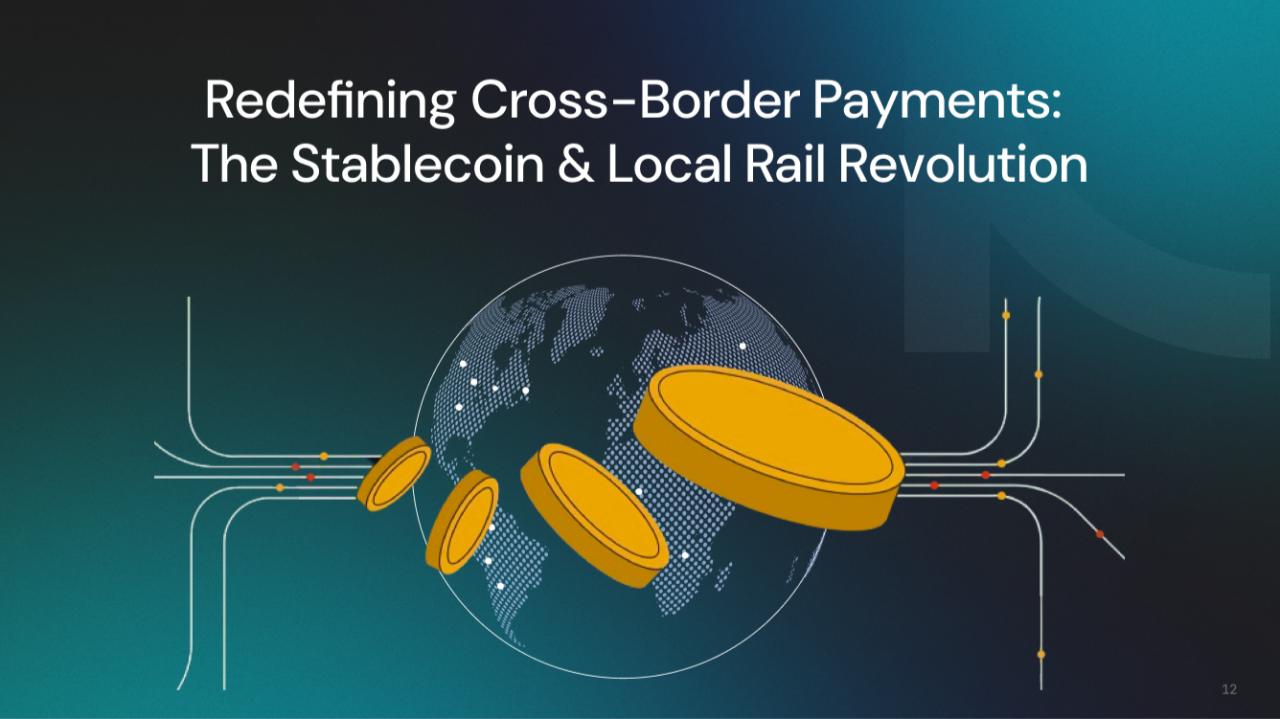
Stablecoin Rails Are Today’s Imperative: How Avinya Labs Powers the Future of Payments

As the world’s financial ecosystem rapidly transforms, stablecoins are emerging as the new backbone of global payments. Banks, venture capitalists, and builders are racing to build payment rails that embed trust, speed, and precision into every transaction. At Avinya Labs, we believe stablecoin infrastructure is not just a future promise—it’s an urgent necessity.

In this blog, we’ll explore the challenges and opportunities of stablecoin rails, real-world success stories, and how Avinya Labs empowers businesses to lead the stablecoin development revolution.

Why Stablecoin Adoption Faces Real-World Roadblocks

Despite their potential, stablecoins face hurdles that slow adoption:

  • Regulatory Uncertainty: Fragmented rules make compliance complicated.

  • Liquidity Fragmentation: Isolated pools hinder smooth cross-chain flows.

  • Scalability Limits: Congestion and fees frustrate users.

  • Security Risks: Stablecoins require robust defenses against attacks.

  • Legacy Resistance: Traditional finance hesitates due to compliance risks.

Avinya Labs provides advanced stablecoin development services that integrate compliance, security, and scalability, enabling seamless, resilient payment rails.

Industry Giants and Startups Shaping the Stablecoin Landscape

The momentum in 2025 is undeniable:

  • Major banks are launching regulated digital currencies.

  • Venture capitalists are funding stablecoin infrastructure.

  • Fintech startups are replacing legacy systems with blockchain-native solutions.

Organizations acting now will define tomorrow’s payment rails. Avinya Labs equips you with mature, battle-tested architectures and regulatory expertise to deploy scalable, compliant stablecoin solutions rapidly.

Real-World Success: Stablecoin Rails in Action

Stablecoin infrastructure is live and growing:

  • Guatemala’s largest bank uses stablecoin rails for remittances.

  • Mesta launched hybrid fiat-stablecoin rails for cross-border payments.

  • Visa and Bridge partnered to make stablecoins accessible for everyday purchases.

These successes show how compliance and innovation merge to build the future of finance. Avinya Labs helps you integrate stablecoin rails that unlock instant settlements and frictionless cross-border payments.

Monetizing the Stablecoin Shift: Is Your Business Ready?

Many businesses struggle to monetize stablecoin rails due to integration complexity and compliance demands. Avinya Labs offers modular, compliance-ready development services covering:

  • Smart contract security

  • Oracle integration

  • Cross-chain compatibility

  • User experience design

Our solutions accelerate time-to-market and unlock new revenue streams through fee-based transactions, token incentives, and DeFi innovations.

Frequently Asked Questions

What are stablecoin rails?

Stablecoin rails are the payment infrastructure, wallets, settlement networks, and integrations, that let businesses move value using dollar-pegged stablecoins instead of traditional card or bank-transfer networks.

Why hasn’t stablecoin adoption gone fully mainstream yet?

Real-world roadblocks include regulatory uncertainty across jurisdictions, integration complexity with existing financial systems, and limited merchant tooling, not a lack of technical viability.

Which companies are leading stablecoin infrastructure?

Both established payment companies and crypto-native platforms are building stablecoin rails, spanning issuance, settlement, and merchant integration, the space includes both industry giants and focused startups.

How can a business monetize the shift to stablecoin payments?

By reducing payment processing costs, accessing cross-border customers more easily, and, for platforms, offering stablecoin settlement as a differentiated feature to merchants who are cost-sensitive on transaction fees.
What Is Cryptocurrency Tokenomics? A Strategic Guide for Businesses

Introduction: The Missing Link in RWA Adoption

Tokenized Real-World Assets (RWAs) such as real estate, bonds, and precious metals are surging in popularity, projected to become a $16 trillion market by 2030 (BCG). Yet most institutions overlook one crucial element: tokenomics. While infrastructure and tokenization platforms are rapidly evolving, many institutional players fail to build well-structured token economies that power long-term utility, compliance, and revenue.

In contrast, Web3-native protocols design token models that not only represent value but also circulate it, fueling ecosystems, incentivizing participation, and driving retention.

In this strategic guide, we break down what tokenomics is, why it matters, and how to craft sustainable, scalable token models tailored for modern digital ecosystems and tokenized assets.

What Is Tokenomics?

Tokenomics (a blend of “token” and “economics”) refers to the design principles, incentives, and governance systems behind a digital token’s lifecycle: how it’s created, distributed, and used.

Core components:

  • Token Supply: Fixed, inflationary, or deflationary models.
  • Distribution Schedules: How tokens are allocated among founders, investors, and the community.
  • Utility: Use cases like governance, staking, payments, or access control.
  • Market Dynamics: Supply-demand mechanisms, burns, emissions.
  • Value Allocation: Determines who earns, controls, and contributes value across the system.

Think of tokenomics as the economic engine behind your protocol.

Key Elements of Robust Tokenomics

1. Supply & Emissions Schedule

  • Fixed Supply: Promotes scarcity (e.g., 100M tokens max).
  • Inflationary: New tokens minted to reward participation.
  • Deflationary: Burn mechanisms reduce total supply over time.

2. Token Allocation Model

Stakeholder Recommended Allocation
Founders & Team 10%–20% (vested over 4+ years)
Investors 15%–30% (cliff + linear vesting)
Community Rewards 20%–40% (airdrop, farming, loyalty)
Treasury 10%–25% (DAO or foundation control)
Strategic Partners 5%–10% (ecosystem incentives)

3. Utility Design

Design tokens to serve multiple roles:

  • Access Control: Feature unlocking, gated content, loyalty tiers.
  • Medium of Exchange: Payment for services within the protocol.
  • Staking Mechanisms: Reward participation or secure networks.
  • Collateralization: Use in DeFi loans or RWA minting.
  • Governance Rights: Proposals, treasury allocation, upgrades.

4. Value Controls & Economic Loops

Integrate:

  • Buybacks & Burns
  • Fee Redistribution to token holders
  • Liquidity Mining
  • Bonding Curves for automated pricing

5. Governance Architecture

  • Centralized Governance: Internal team controls evolution.
  • DAO-Based Governance: Token holders vote on key changes.
  • Hybrid Models: Gradual decentralization.

Why Tokenomics Is a Business Imperative

For Protocols

  • Incentivize engagement, liquidity, and retention
  • Monetize activity via staking, auctions, and premium access
  • Align long-term incentives for investors and users

For Institutions

  • Drive new revenue through token-powered services
  • Create programmable compliance aligned with MiCA, Basel IV, AMLA
  • Manage digital asset balance sheets and customer incentive structures

Successful Tokenomics in Action

MakerDAO (DAI + MKR): Stablecoin governance powered by MKR holders with vault-based collateral management.

Centrifuge (CFG): Decentralized RWA financing using staked CFG to underwrite deals and rewards ecosystem participants.

Curve (CRV): veCRV model offers boosted rewards for long-term stakers, aligning liquidity and governance.

Red Flags to Avoid

  • Tokens with no utility or incentive alignment
  • Poorly structured vesting (e.g., early dumps by insiders)
  • Unlimited inflation with no value capture
  • Absence of a treasury or deflationary mechanism
  • Centralized control without legal clarity

Avinya Labs: Enterprise-Ready Tokenomics Infrastructure

Avinya Labs helps fintechs, exchanges, and asset managers design and launch scalable token economies with:

  • White-label exchange & DEX platforms
  • Smart contract toolkits with staking, burn, and emissions modules
  • Compliance-ready infrastructure (KYC, AML, MiCA modules)
  • Support for RWA tokenization (real estate, gold, fixed-income assets)

Conclusion: Design Tokenomics That Work

A token is not just a financial product, it’s an economy. And a good economy requires thoughtful planning, stakeholder alignment, and regulatory foresight.

To succeed in the RWA and Web3 space, businesses must go beyond minting tokens. They must design systems of value exchange, control, and incentive that fuel usage, trust, and revenue.

Ready to Build a Token that Performs? Contact Avinya Labs to schedule a demo and explore how we help you craft scalable, compliant token ecosystems that grow with your business.

Frequently Asked Questions

What is tokenomics?

Tokenomics is the design of a digital token’s supply, distribution, utility, and governance, the economic rules that determine how a token is created, allocated, and used within its ecosystem.

What makes a token allocation model sustainable?

A balanced split across founders, investors, community rewards, and treasury, paired with vesting schedules that prevent early insider dumping and align long-term incentives across all stakeholders.

What are common tokenomics red flags investors look for?

Tokens with no clear utility, poorly structured vesting that allows early insiders to exit quickly, unlimited inflation with no offsetting value capture, and centralized control without legal clarity.

Does every crypto project need its own token?

No. A token should serve a specific purpose, governance, access, or incentive alignment, rather than existing by default. Projects that don’t need programmable incentives or decentralized governance often don’t benefit from issuing one.

What Is the Best Web3 Business to Start in 2025?

What Is the Best Web3 Business to Start in 2025?

Web3 is revolutionizing business across industries by enabling decentralized finance, NFTs, blockchain infrastructure, and play-to-earn gaming models. As blockchain adoption accelerates, strategically positioning your business in the right Web3 sector is crucial for long-term success and profitability. But which Web3 business models deliver the highest returns and sustainability?

1. Crypto Exchanges and Trading Platforms

Crypto exchanges are the core drivers of the Web3 economy, enabling seamless buying, selling, and trading of digital assets. Both centralized exchanges (CEX) and decentralized exchanges (DEX) generate significant revenue from transaction fees, listing fees, and trading spreads. With growing institutional involvement and retail interest, demand for secure, scalable, and compliant trading platforms is booming. Leading platforms like Binance exemplify the revenue potential by combining spot trading, staking, futures, and NFT marketplaces.

2. Asset Tokenization and Management

Tokenization transforms real-world assets—such as real estate, stocks, and commodities—into liquid, blockchain-based digital tokens. Platforms like RealT empower investors worldwide to purchase fractional ownership of properties with crypto and earn rental income via smart contracts. Tokenization unlocks liquidity in traditionally illiquid markets and democratizes global investment access. As regulatory clarity improves, asset tokenization is poised for exponential institutional adoption.

3. Decentralized Finance (DeFi) Platforms

DeFi eliminates traditional intermediaries by enabling users to lend, borrow, and trade digital assets via smart contracts on blockchains like Ethereum and Solana. Leading protocols such as Aave allow users to earn interest or borrow instantly through innovative products like flash loans. DeFi platforms thrive by offering non-custodial, accessible financial services globally, generating revenue from fees, interest spreads, and governance tokens. Expanding into tokenized real-world assets further boosts their growth potential.

4. Web3 Gaming and Play-to-Earn (P2E)

Blockchain gaming combines NFTs, digital asset ownership, and crypto rewards to create new monetization models. Axie Infinity pioneered P2E gaming, reaching millions of players and generating billions in NFT transactions. The gaming industry’s vast market potential is amplified by blockchain’s ability to enable true ownership, tradeable in-game assets, and metaverse economies. Revenue streams include NFT sales, transaction fees, and staking, making Web3 gaming a lucrative and evolving business opportunity.


How Avinya Labs Empowers Your Web3 Venture

Choosing the right Web3 business model is only half the battle—success depends on robust blockchain infrastructure and expert support. Avinya Labs offers end-to-end blockchain solutions including exchange development, asset tokenization, DeFi platform creation, and gaming integrations. We help startups and enterprises build secure, scalable, and compliant Web3 projects designed to maximize growth and profitability.

Ready to launch your Web3 business with industry-leading infrastructure? Contact Avinya Labs today for tailored blockchain solutions that power the future of decentralized commerce.

Frequently Asked Questions

What’s the most promising type of Web3 business to start right now?

Crypto exchanges and trading platforms, asset tokenization, DeFi platforms, and Web3 gaming are currently the strongest categories, each addressing a distinct, growing demand rather than competing in the same niche.

Do I need coding experience to start a Web3 business?

No, founders commonly partner with a development team for the technical build while focusing on product direction, go-to-market, and business strategy themselves.

How much capital is needed to launch a Web3 startup?

It varies significantly by category, a DeFi protocol MVP requires far less upfront investment than a full exchange with liquidity and compliance infrastructure. Starting with a scoped MVP is the common way to validate before committing larger capital.

What regulatory considerations apply to Web3 businesses?

Requirements depend on the business model and jurisdiction, exchanges and asset tokenization platforms generally face the most regulatory scrutiny, while some DeFi and gaming models carry lighter, though still evolving, compliance requirements.