

Operational AI Systems: The Ultimate 2026 Guide to Smarter, Scalable Enterprise Infrastructure

Operational AI systems are becoming the new competitive baseline for enterprises in 2026. The question is no longer whether companies adopt AI. The real question is how deeply AI is embedded into core operations.
Across industries, AI has moved beyond experimentation. It is no longer a chatbot, a dashboard feature, or a pilot initiative. It is becoming infrastructure.
Companies that treat AI as a surface-level feature will see incremental gains. Organizations that implement operational AI systems into decision flows, compliance pipelines, revenue engines, and infrastructure layers will unlock exponential leverage.
Waiting is no longer neutral. It is a strategic disadvantage.
Why Operational AI Systems Are the New Competitive Baseline
Operational AI systems differ from traditional automation tools. They do not simply respond to prompts. They reason, act, adapt, and execute across workflows.
Instead of isolated task automation, operational AI systems orchestrate entire processes across:
• Legal operations
• Compliance and governance
• Procurement
• Sales and revenue
• Finance
• Web3 infrastructure
• Enterprise operations
Industry research shows that agentic AI and multi-agent orchestration are reshaping enterprise architecture. AI systems are now capable of executing end-to-end workflows with minimal human intervention.
Operational AI systems are becoming the operating fabric of modern enterprises.
What Makes Operational AI Systems Different from Traditional Automation
Legacy automation focused on rule-based RPA and static workflows. It required heavy manual oversight and constant maintenance.
Operational AI systems introduce:
• Context-aware decision-making
• Real-time data processing
• Adaptive learning models
• Cross-platform orchestration
• Autonomous exception routing
Instead of automating a step, operational AI systems automate judgment within defined guardrails.
This is the difference between task automation and operational intelligence.
Operational AI Systems in Action Across Enterprise Functions
Intelligent Legal Operations
Operational AI systems analyze contracts, extract clauses, detect compliance risks, and automatically route exceptions. Legal teams reduce turnaround time while maintaining regulatory precision.
Continuous Compliance and Governance
AI-powered compliance monitoring shifts from periodic audits to real-time governance. Operational AI systems monitor documentation, detect anomalies, score risk dynamically, and trigger escalation workflows automatically.
Autonomous Procurement Intelligence
Procurement teams leverage operational AI systems to compare supplier quotes, detect pricing anomalies, assess vendor risk, and forecast performance trends.
AI-Enabled Revenue Engines
Modern revenue operations use operational AI systems for:
• Intent-based lead scoring
• Personalized outreach sequencing
• Meeting booking automation
• Pipeline analytics
• Conversion optimization
Sales teams focus on closing while AI handles research and qualification layers.
Enterprise Hyperautomation
Operational AI systems orchestrate ERP, CRM, finance, and cloud platforms simultaneously. They distribute workloads intelligently, automate approvals, and reduce decision latency across departments.
Web3 and Crypto Infrastructure Monitoring
In digital asset environments, operational AI systems monitor on-chain activity, detect smart contract anomalies, trigger treasury alerts, and manage transaction risk scoring in real time.
Operational AI systems also integrate seamlessly with AI and Web3 infrastructure for smart contract monitoring and digital asset risk management.
The Measurable Benefits of Operational AI Systems
Enterprises implementing operational AI systems consistently report:
• Faster decision cycles
• Reduced compliance risk
• Lower operational overhead
• Higher revenue velocity
• Stronger data unification
• Improved cross-functional visibility
The advantage compounds because operational AI systems continuously improve workflow intelligence.
How to Implement Operational AI Systems in Enterprise Workflows
Adopting operational AI systems requires architectural thinking.
Step 1: Audit High-Friction Workflows
Identify processes with repetitive decision-making and approval bottlenecks.
Step 2: Map Decision Points
Document where judgment is required. These are ideal candidates for operational AI systems.
Step 3: Introduce Agentic Layers
Deploy AI agents that can reason within defined guardrails and trigger automated actions.
Step 4: Integrate with Core Systems
Operational AI systems must connect with ERP, CRM, compliance platforms, cloud infrastructure, and blockchain systems.
Step 5: Measure Outcome-Based KPIs
Track reduction in cycle time, risk exposure, cost per transaction, and revenue acceleration.
Operational AI systems succeed when embedded directly into execution layers.
Many enterprises start by evaluating enterprise AI solutions before deploying operational AI systems at scale.
The Search Imperative in an AI-Driven World
As AI reshapes enterprise infrastructure, it is also transforming digital visibility. Search engines increasingly generate AI-driven summaries and answer-based results.
Organizations implementing agentic AI workflows must ensure their digital presence reflects authority in:
• Enterprise AI infrastructure
• Agentic AI systems
• AI workflow automation
• Intelligent compliance systems
Visibility influences procurement decisions long before a sales conversation begins.
How Avinya Labs Builds Operational AI Systems
At Avinya Labs, we design and deploy operational AI systems that integrate directly into enterprise workflows.
Our approach is grounded in:
• Intent-driven automation
• Agentic execution
• Workflow orchestration across departments
• Measurable outcome tracking
• Secure integration with Web3 and enterprise platforms
Operational AI systems are not a trend. They are the foundation of scalable AI infrastructure.
The Strategic Reality of 2026
Operational AI systems are transitioning from competitive advantage to competitive necessity.
Enterprises that redesign workflows around intelligent execution layers will scale faster, reduce risk more effectively, and build stronger data advantages.
The shift has already begun.
Recently Added Blogs
We invite you to explore a selection of our completed blockchain development projects, offering a glimpse into our achievements and expertise.
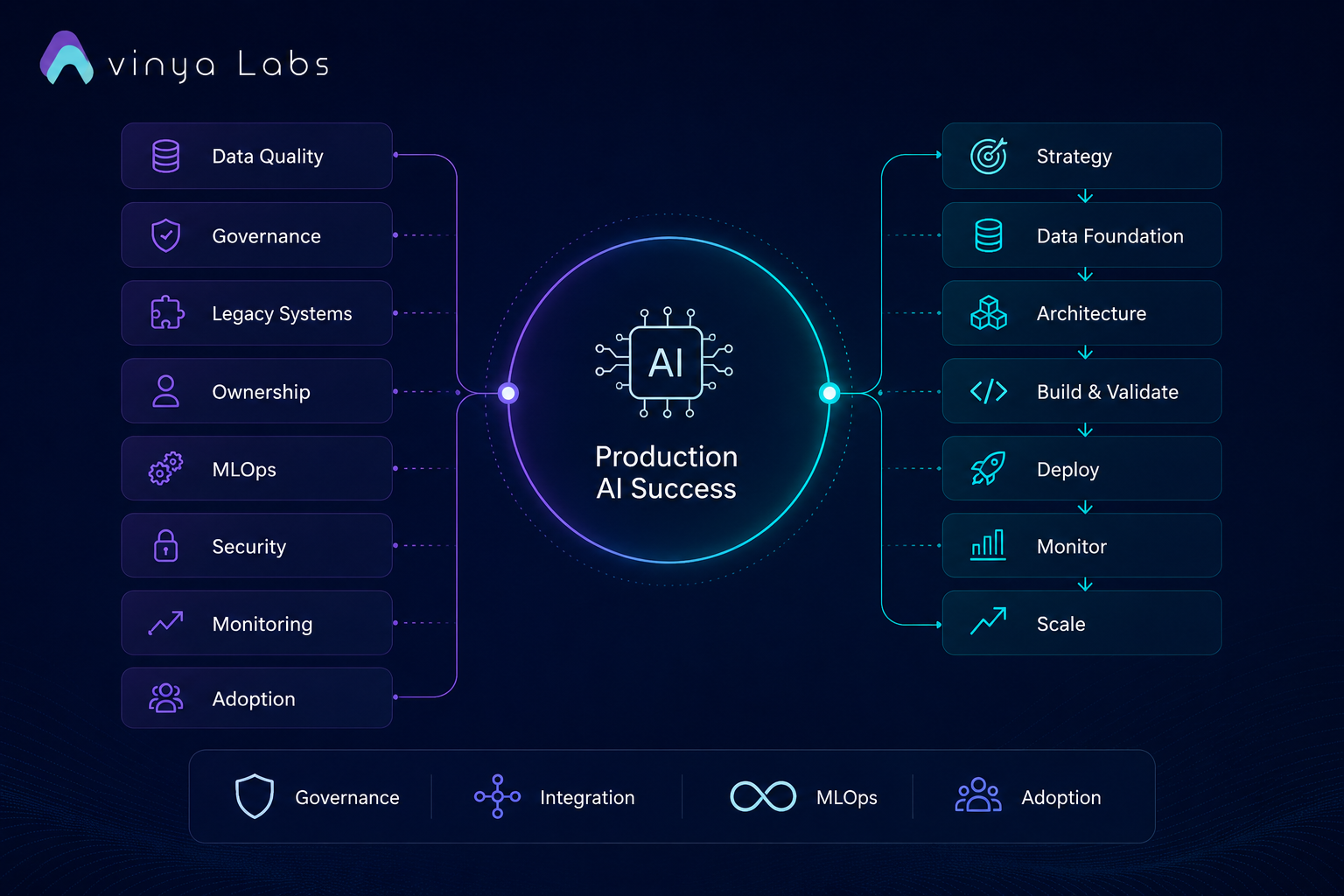
 May 26, 2026
Enterprise AI Deployment: Why AI Projects Fail to Reach Production in 2026
The Hidden Gap Between AI Pilots and Enterprise-Scale Reality Enterprise AI deployment has become a strategic priority for organizations seeking productivity gains, operational efficiency, and competitive advantage. Yet despite significant investment, many AI projects never reach production or fail to deliver measurable business value. Most enterprises have already tested copilots, chatbots, predictive models, recommendation engines, […]
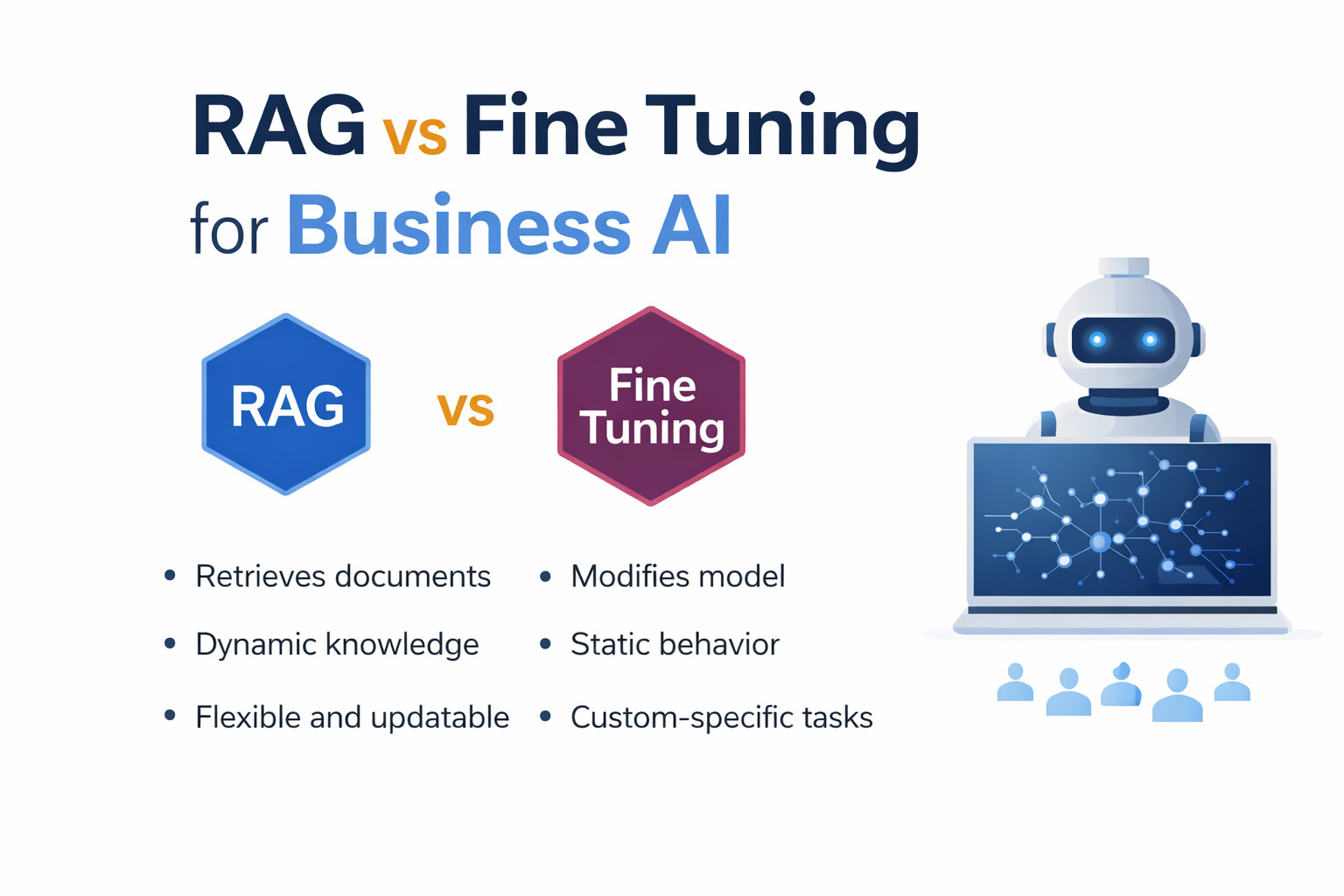
Mar 24, 2026
RAG vs Fine Tuning for Business AI: 7 Powerful Differences Every SMB Should Know
Introduction When building AI systems for companies, one of the most common questions is whether to use RAG vs fine tuning for business AI. Both approaches allow businesses to customize LLMs, but they solve very different problems. Many SMBs try fine tuning when they actually need retrieval, while others build RAG systems when model training […]
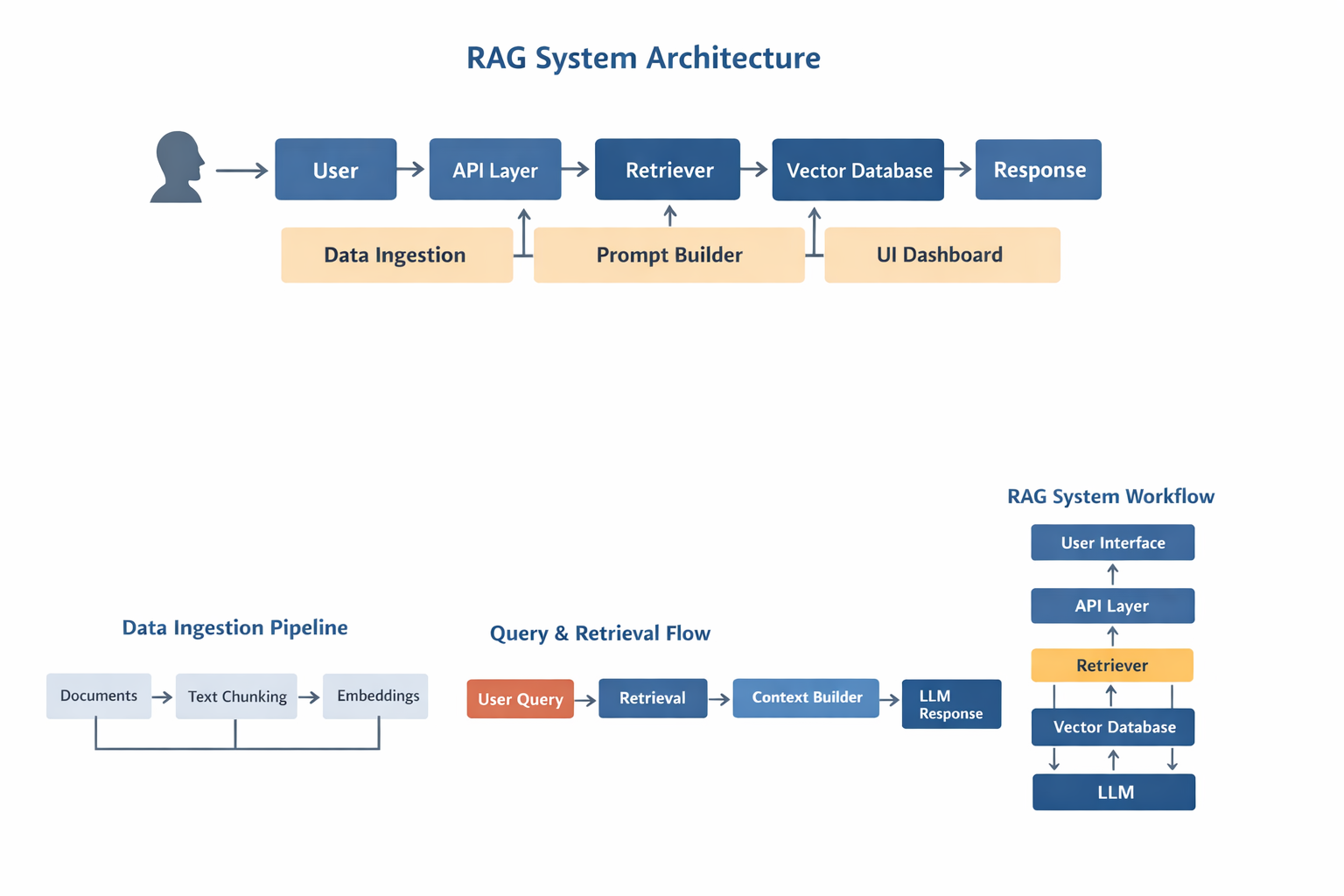
Mar 24, 2026
RAG System for Company Knowledge Base: 7 Powerful Architecture Tips for SMB AI Systems
Introduction A RAG system for company knowledge base allows businesses to use AI with internal documents, SOPs, emails, and databases without training a custom model.Instead of storing knowledge inside the model, a RAG architecture retrieves relevant information at runtime and sends it to the LLM. This approach is becoming the standard for SMBs building internal […]