

Agentic Commerce: 7 Powerful Ways AI Agents Are Transforming E-Commerce
Introduction
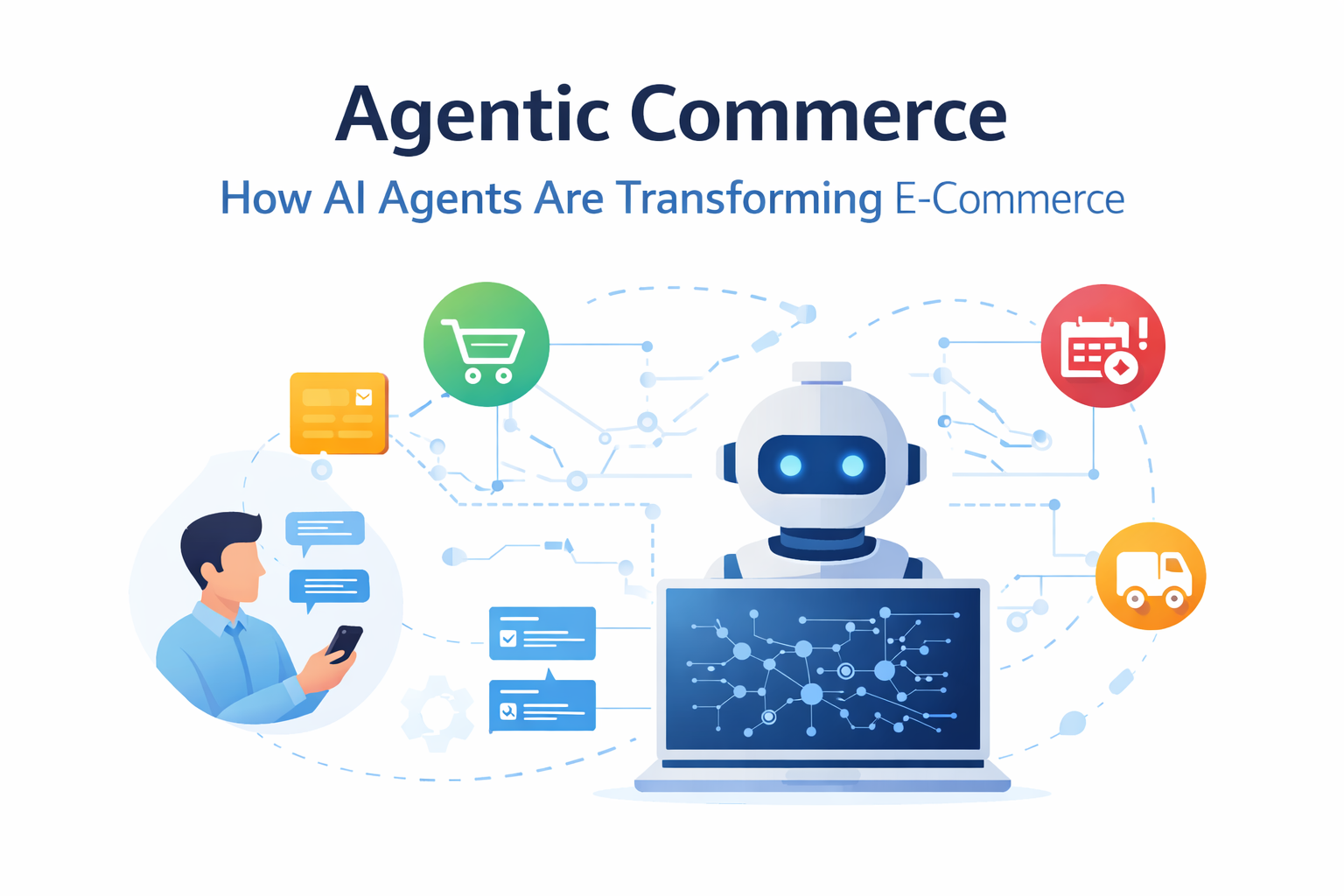
Agentic commerce is emerging as the next major shift in artificial intelligence and digital product development.
After the rise of generative AI, the industry is now moving toward agentic AI systems that can reason, plan, and act autonomously.
At Avinya Labs, we see agentic commerce as the evolution of e-commerce from static websites to intelligent systems that can complete tasks on behalf of the user.
Instead of searching, clicking, and filling forms, users interact with an AI agent that understands intent and executes actions automatically.
This guide explains what agentic commerce is, how it works, and how AI agents are changing the way modern digital products are built.
What is Agentic Commerce
Agentic commerce is a form of e-commerce where an AI agent can complete the entire transaction loop.
Traditional flow:
User → Search → Filter → Compare → Checkout
Agentic flow:
User → AI Agent → Plan → Execute → Purchase → Confirm
In agentic commerce, the user gives an instruction, and the system performs the steps automatically.
Example request:
Book me a nonstop flight to London under $600 next week with no red-eye.
An agentic system can:
- search flights
- check preferences
- verify loyalty accounts
- select the best option
- complete the purchase
This is the difference between generative AI and agentic AI.
Why Agentic Commerce Matters
Modern e-commerce has friction:
- too many options
- manual comparisons
- repetitive forms
- slow checkout
- no personalization
Agentic commerce removes friction by allowing AI agents to act on behalf of the user.
Benefits:
- faster decisions
- better personalization
- fewer clicks
- automation of routine purchases
- context-aware recommendations
Agentic systems turn websites into services.
From Generative AI to Agentic AI
Generative AI can:
- write text
- create images
- answer questions
Agentic AI can:
- plan actions
- use tools
- call APIs
- make decisions
- complete tasks
This shift is important for ecommerce, fintech, travel, and SaaS.
Diagram description:
User → AI → Reasoning → Tools → API → Action → Result
Agentic commerce is built on this architecture.
Core Components of Agentic Commerce
Agentic systems rely on three main pillars.
Memory
Agents store context about the user.
Examples:
- preferences
- past purchases
- size
- budget
- habits
Memory allows personalization.
Memory types:
- short-term memory
- long-term memory
- vector memory
- database memory
Memory is required for agentic commerce.
Tools and API Integration
Agents must access external systems.
Examples:
- payment gateways
- inventory APIs
- booking APIs
- shipping APIs
- CRM systems
Without tools, agents cannot act.
Example flow:
Agent → API → Payment → Order → Confirmation
Modern agentic systems rely heavily on API orchestration.
External reference:
https://platform.openai.com/
https://stripe.com/
https://aws.amazon.com/
(use dofollow)
Reasoning
Reasoning allows agents to break tasks into steps.
Example:
Plan dinner party
Steps:
- find recipes
- check allergies
- order groceries
- schedule delivery
Reasoning makes agentic commerce possible.
Reasoning models use:
- LLM planning
- tool calling
- chain of thought
- multi-step execution
This is the core of agentic AI.
Architecture of Agentic Commerce Systems
Typical architecture:
User → UI
UI → Agent
Agent → Memory
Agent → Tools
Agent → APIs
Agent → LLM
LLM → Decision
Decision → Action
Action → Result
Diagram description:
User → Agent → Planner → Tool → API → Database → Response
Agentic commerce requires orchestration, not just chat.
Hyper-Personalization in Agentic Commerce
Traditional ecommerce uses segmentation.
Agentic commerce uses individual context.
Examples:
- remembers favorite brands
- knows budget
- predicts needs
- auto-reorders items
This creates:
- faster checkout
- higher conversion
- better UX
- less friction
Agents turn ecommerce into conversation.
Autonomous Purchasing
One of the biggest changes in agentic commerce is autonomous action.
Examples:
- reorder groceries
- renew subscriptions
- book travel
- schedule services
Users set permissions, and agents execute.
This requires strong permission systems.
Engineering Challenges in AI-driven commerce
Agentic systems introduce new risks.
Developers must solve:
- security
- permissions
- liability
- explainability
- governance
This makes agentic commerce more complex than normal ecommerce.
The Liability Problem
If an agent makes a mistake:
Who is responsible?
Possible answers:
- user
- developer
- retailer
- payment provider
Systems must log every decision.
Audit logs are required.
Guardrails and Permissions
Agents must have limits.
Examples:
Allowed:
- buy groceries
- renew subscription
Not allowed:
- large payments
- unknown vendors
Permission systems must be granular.
Users must control the agent.
Transparency and Explainability
Users must understand why the agent acted.
Example:
Flight selected because:
- cheaper
- preferred airline
- no red-eye
- loyalty points
Explainability builds trust.
UI must show reasoning.
Security in Agentic Systems
Agentic commerce increases attack surface.
Risks:
- prompt injection
- malicious APIs
- fake data
- adversarial input
Security measures:
- validation
- sandboxing
- permission checks
- logging
- monitoring
Security is critical for production agents.
Multi-Agent Systems in Commerce
Future systems will not use one agent.
They will use multiple agents.
Example:
Travel agent
Calendar agent
Finance agent
Booking agent
Flow:
Agent → Agent → Agent → Result
Multi-agent architecture improves accuracy.
Diagram description:
User → Main Agent → Sub Agents → APIs → Result
Multi-agent systems are the future of agentic commerce.
Why intelligent commerce Will Grow Fast
Reasons:
- better LLMs
- tool calling support
- API ecosystems
- payment integrations
- vector memory
- multi-agent frameworks
Agentic commerce is already appearing in:
- travel
- retail
- fintech
- SaaS
- marketplaces
This shift is similar to the move from web to mobile.
Building Agentic Systems at Avinya Labs
At Avinya Labs, we build production-grade agentic systems including:
- AI agents
- workflow automation
- API orchestration
- multi-agent platforms
- secure permission systems
- custom AI backends
We focus on real business systems, not demos.
We help companies build the infrastructure for agentic commerce.
Serving clients globally including Dubai, Singapore, and Hong Kong.
FAQ
What is agentic commerce
Agentic commerce is a system where AI agents can complete purchases or actions automatically without manual steps.
How is agentic AI different from generative AI
Generative AI creates content, while agentic AI can plan, reason, and execute actions.
Is agentic commerce safe
Yes, if permission systems, logging, and security controls are implemented correctly.
Do agentic systems use APIs
Yes, agentic systems rely heavily on APIs to interact with external services.
What are multi-agent systems
Multi-agent systems use multiple specialized agents working together to complete complex tasks.
Can SMBs build agent-based ecommerce
Yes, SMBs can build agentic systems using LLMs, APIs, and workflow automation.
Is agentic commerce the future of ecommerce
Many experts believe agentic commerce will become the default way users interact with online services.
Recently Added Blogs
We invite you to explore a selection of our completed blockchain development projects, offering a glimpse into our achievements and expertise.
 Mar 24, 2026
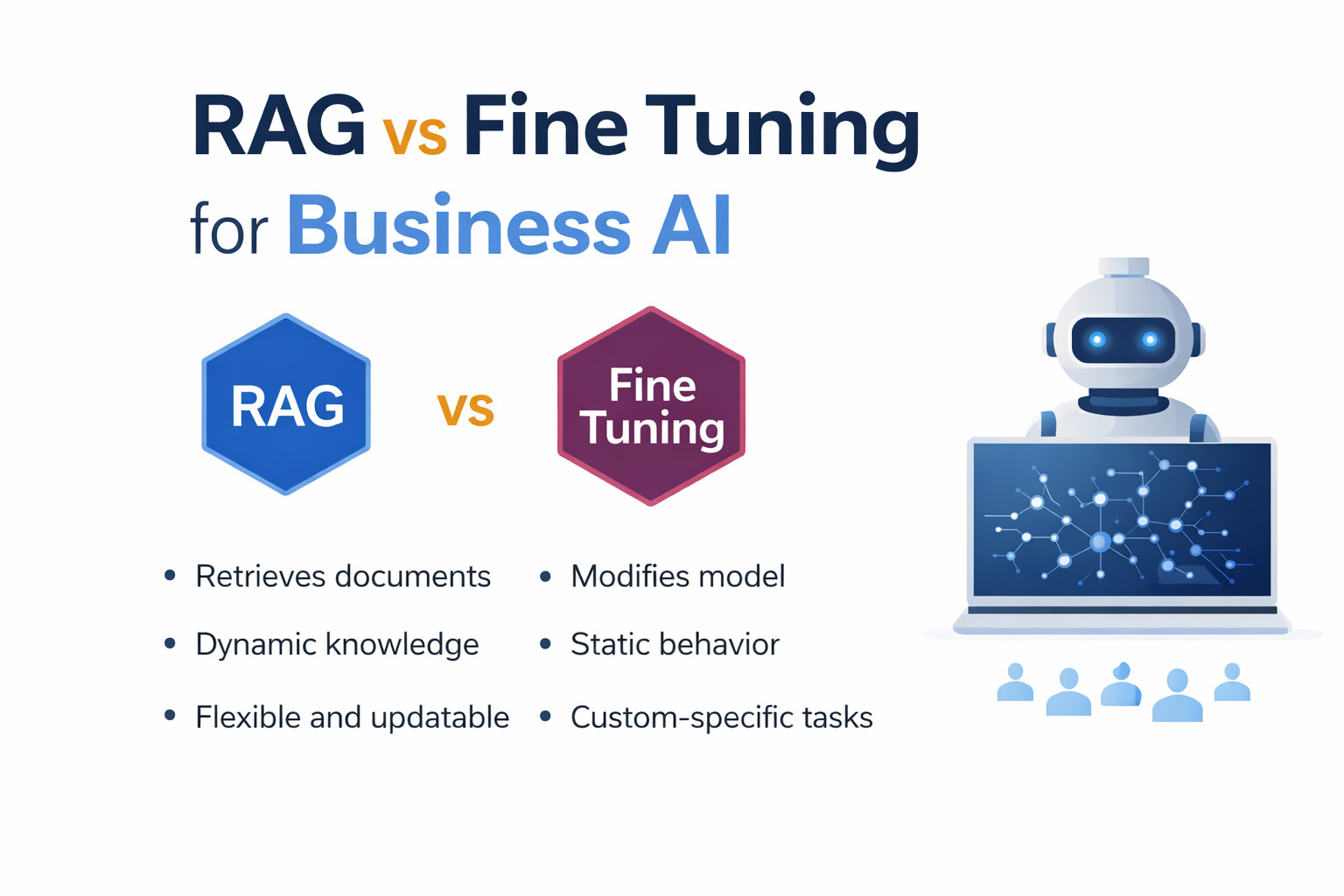
RAG vs Fine Tuning for Business AI: 7 Powerful Differences Every SMB Should Know
Introduction When building AI systems for companies, one of the most common questions is whether to use RAG vs fine tuning for business AI. Both approaches allow businesses to customize LLMs, but they solve very different problems. Many SMBs try fine tuning when they actually need retrieval, while others build RAG systems when model training […]
Mar 24, 2026
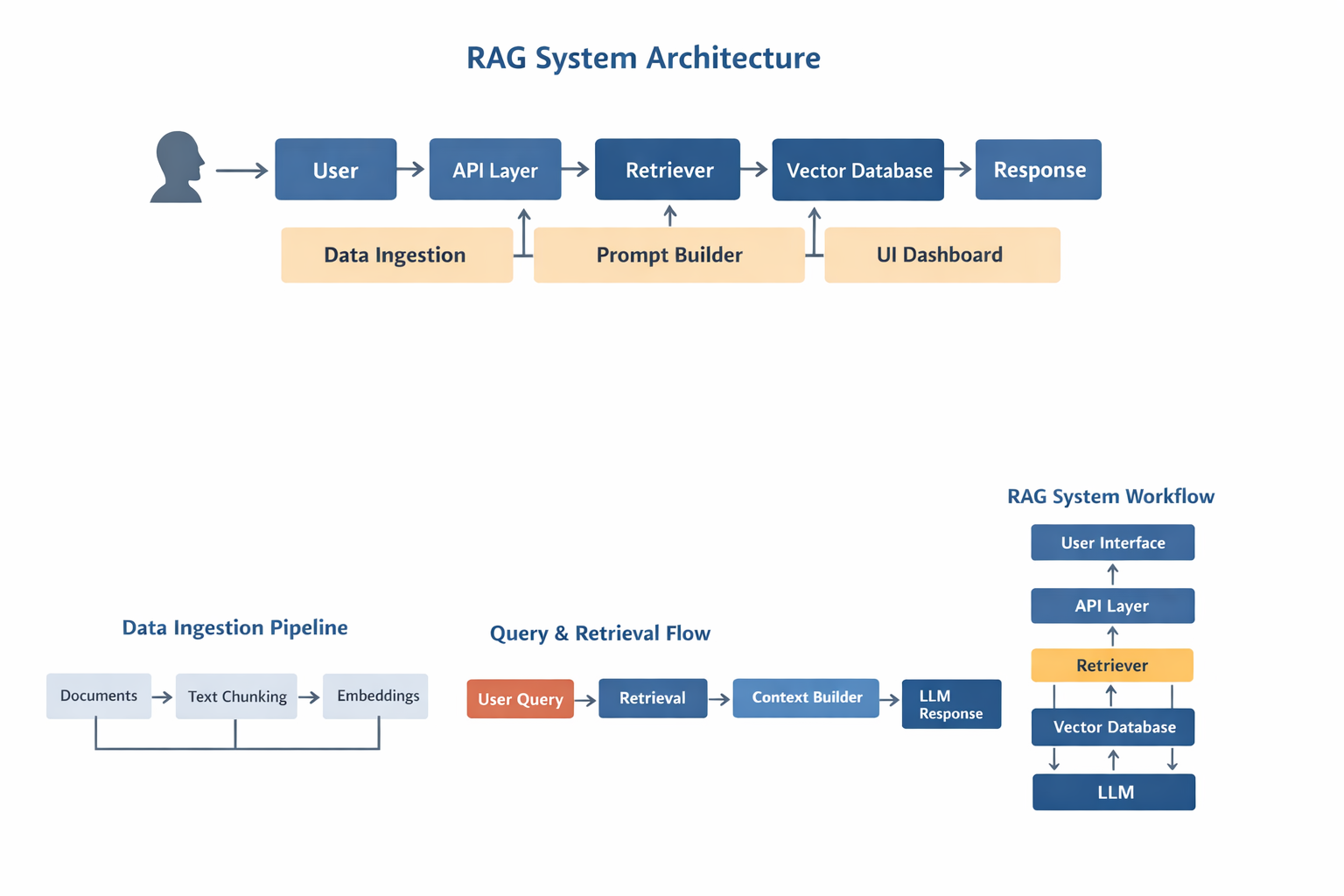
RAG System for Company Knowledge Base: 7 Powerful Architecture Tips for SMB AI Systems
Introduction A RAG system for company knowledge base allows businesses to use AI with internal documents, SOPs, emails, and databases without training a custom model.Instead of storing knowledge inside the model, a RAG architecture retrieves relevant information at runtime and sends it to the LLM. This approach is becoming the standard for SMBs building internal […]
Feb 26, 2026
Operational AI Systems: The Ultimate 2026 Guide to Smarter, Scalable Enterprise Infrastructure
Operational AI systems are becoming the new competitive baseline for enterprises in 2026. The question is no longer whether companies adopt AI. The real question is how deeply AI is embedded into core operations. Across industries, AI has moved beyond experimentation. It is no longer a chatbot, a dashboard feature, or a pilot initiative. It […]