

Centralized Crypto Exchange: 7 Important Things to Know Before Launching

Centralized Crypto Exchange: Everything You Need to Know Before Launching
Introduction
Launching a centralized crypto exchange has become one of the most attractive opportunities in the Web3 and fintech space. As global adoption of digital assets grows, both startups and institutions are looking to build their own trading platforms to capture new revenue streams.
However, building a crypto exchange from scratch is complex. It involves high development costs, strict regulatory requirements, liquidity management, and advanced security infrastructure.
Because of these challenges, many companies now choose white label crypto exchange or turnkey solutions that allow them to launch faster without building everything in-house.
In this guide, we explain how a centralized crypto exchange works, what features are required, and how to launch a secure and scalable platform.
What is a Centralized Crypto Exchange
A centralized crypto exchange (CEX) is a trading platform where users can buy, sell, and trade digital assets through a managed system controlled by an organization.
Unlike decentralized exchanges, a centralized exchange:
- holds user funds in custody
- manages order matching
- controls liquidity
- enforces compliance rules
Typical architecture:
User → UI → API → Matching Engine → Wallet → Database → Liquidity → Trade
Centralized exchanges are popular because they provide:
- fast execution
- high liquidity
- user-friendly interface
- advanced trading tools
Most large crypto platforms today are centralized exchanges.
Why Launch a Centralized Crypto Exchange
Launching a centralized crypto exchange offers multiple business advantages.
Multiple Revenue Streams
Exchanges generate revenue through:
- trading fees
- listing fees
- withdrawal fees
- staking services
- margin trading
- liquidity programs
A well-designed exchange can produce recurring income.
Global Market Access
Crypto trading is global.
A centralized exchange can support:
- multi-chain assets
- fiat gateways
- cross-border users
- institutional trading
This allows businesses to reach a worldwide audience.
Brand Authority in Web3
Operating a centralized crypto exchange positions your company as an infrastructure provider in the digital asset economy.
Exchanges often expand into:
- wallets
- payment gateways
- DeFi platforms
- NFT marketplaces
Launching an exchange can become the foundation of a larger Web3 ecosystem.
Architecture of a Centralized Crypto Exchange
A modern centralized crypto exchange includes several core components.
Diagram description:
User → Frontend → API → Matching Engine → Wallet System → Database → Liquidity → Security Layer → Compliance Layer
Key modules:
- trading engine
- wallet infrastructure
- user management
- liquidity integration
- KYC / AML
- admin dashboard
Each component must be designed for performance and security.
Core Features of a High-Performance Crypto Exchange
A successful centralized crypto exchange must include essential features.
High-Speed Matching Engine
The trading engine is the core of the platform.
Requirements:
- high TPS
- low latency
- real-time order matching
- stable execution
Professional exchanges support tens of thousands of transactions per second.
Secure Wallet Infrastructure
Wallet systems must support:
- multi-currency storage
- hot and cold wallets
- multi-signature security
- private key protection
Security is critical for any centralized crypto exchange.
Liquidity Integration
Liquidity ensures smooth trading.
Exchanges often integrate:
- external liquidity providers
- market makers
- aggregated order books
Good liquidity improves:
- spread
- execution speed
- user experience
Advanced Trading Modules
Modern users expect more than spot trading.
A centralized crypto exchange may include:
- spot trading
- margin trading
- futures trading
- staking
- copy trading
- affiliate system
These features increase engagement and revenue.
Compliance and Security Tools
Regulation is a major part of exchange development.
Required tools:
- KYC / AML integration
- transaction monitoring
- IP tracking
- audit logs
- encryption
Common providers:
- SumSub
- ShuftiPro
- Chainalysis
Compliance is required for global exchanges.
White Label vs Custom Crypto Exchange Development
Businesses usually choose between:
- custom development
- white label crypto exchange
- turnkey exchange platform
White Label Exchange
Advantages:
- faster launch
- lower cost
- proven architecture
- built-in security
White label works well for startups.
Custom Exchange Development
Advantages:
- full control
- custom features
- unique UI
- flexible architecture
Best for large platforms.
Turnkey Exchange
Turnkey solutions provide:
- ready backend
- ready frontend
- liquidity integration
- compliance tools
Ideal for fast deployment.
Choosing the right approach depends on budget and timeline.
Common Challenges When Launching a Centralized Crypto Exchange
Launching a centralized crypto exchange involves several risks.
Security Risks
Exchanges are frequent targets.
Protection requires:
- encryption
- multi-sig wallets
- audits
- DDoS protection
- monitoring
Security must be built from the start.
Liquidity Problems
Without liquidity:
- users cannot trade
- spreads increase
- platform loses trust
Solutions:
- liquidity providers
- market making
- aggregated books
Liquidity is critical for success.
Regulatory Complexity
Different countries require:
- licensing
- reporting
- KYC
- AML
Platforms must support jurisdiction rules.
Compliance-ready architecture is required.
High Development Cost
Building from scratch requires:
- backend
- frontend
- wallet system
- engine
- security
- compliance
White label exchange solutions reduce cost and time.
Top Crypto Exchange Development Providers
Several companies provide crypto exchange software.
Examples:
ChainUp
B2Broker
AlphaPoint
Avinya Labs
Each offers different features.
Choosing depends on:
- budget
- time-to-market
- compliance
- customization
Why Choose Avinya Labs for Crypto Exchange Development
Avinya Labs builds secure and scalable centralized crypto exchange platforms for startups and institutions.
Our solutions include:
- white label exchange
- liquidity integration
- wallet infrastructure
- KYC / AML support
- DeFi integration
- admin dashboard
We focus on production-ready systems designed for real users.
We serve clients globally including Dubai, Singapore, and Hong Kong.
Internal links:
crypto exchange development
web3 development
wallet infrastructure
AI trading systems
FAQ
What is a centralized crypto exchange
A centralized crypto exchange is a platform where users trade digital assets through a managed system controlled by an operator.
How much does it cost to build a crypto exchange
Costs vary depending on features, security, and compliance requirements. Many companies use white label solutions to reduce cost.
What is white label crypto exchange software
White label software is a ready-built exchange platform that can be customized with your brand.
How long does it take to launch a crypto exchange
With white label solutions, an exchange can be launched in weeks instead of months.
Is liquidity required for a new exchange
Yes, liquidity is essential to ensure smooth trading and user trust.
Can a startup launch a centralized crypto exchange
Yes, startups often use turnkey or white label exchange platforms.
Is regulation required for crypto exchanges
Most countries require KYC, AML, and licensing for centralized exchanges.
Recently Added Blogs
We invite you to explore a selection of our completed blockchain development projects, offering a glimpse into our achievements and expertise.
 May 26, 2026
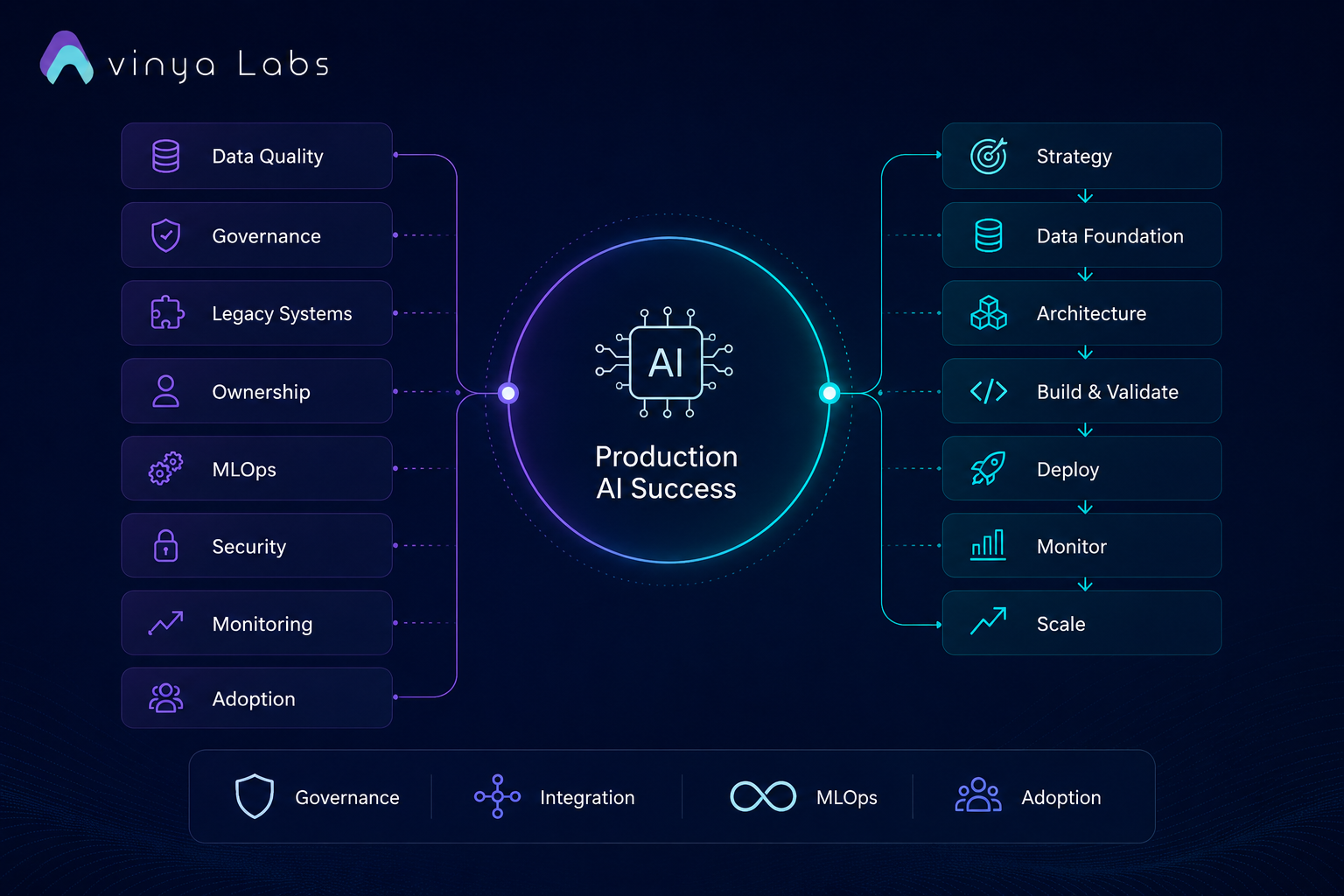
Enterprise AI Deployment: Why AI Projects Fail to Reach Production in 2026
The Hidden Gap Between AI Pilots and Enterprise-Scale Reality Enterprise AI deployment has become a strategic priority for organizations seeking productivity gains, operational efficiency, and competitive advantage. Yet despite significant investment, many AI projects never reach production or fail to deliver measurable business value. Most enterprises have already tested copilots, chatbots, predictive models, recommendation engines, […]
Mar 24, 2026
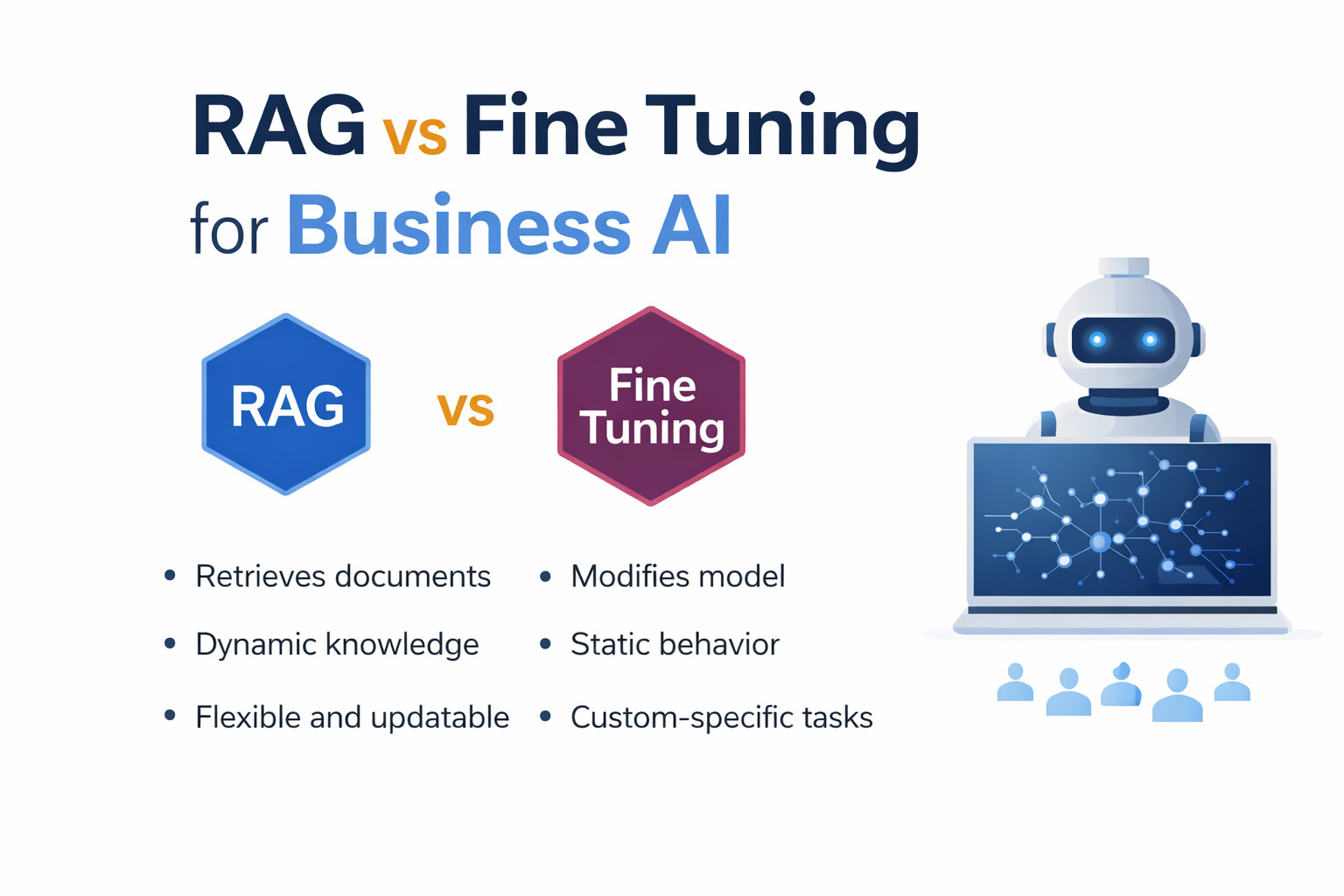
RAG vs Fine Tuning for Business AI: 7 Powerful Differences Every SMB Should Know
Introduction When building AI systems for companies, one of the most common questions is whether to use RAG vs fine tuning for business AI. Both approaches allow businesses to customize LLMs, but they solve very different problems. Many SMBs try fine tuning when they actually need retrieval, while others build RAG systems when model training […]
Mar 24, 2026
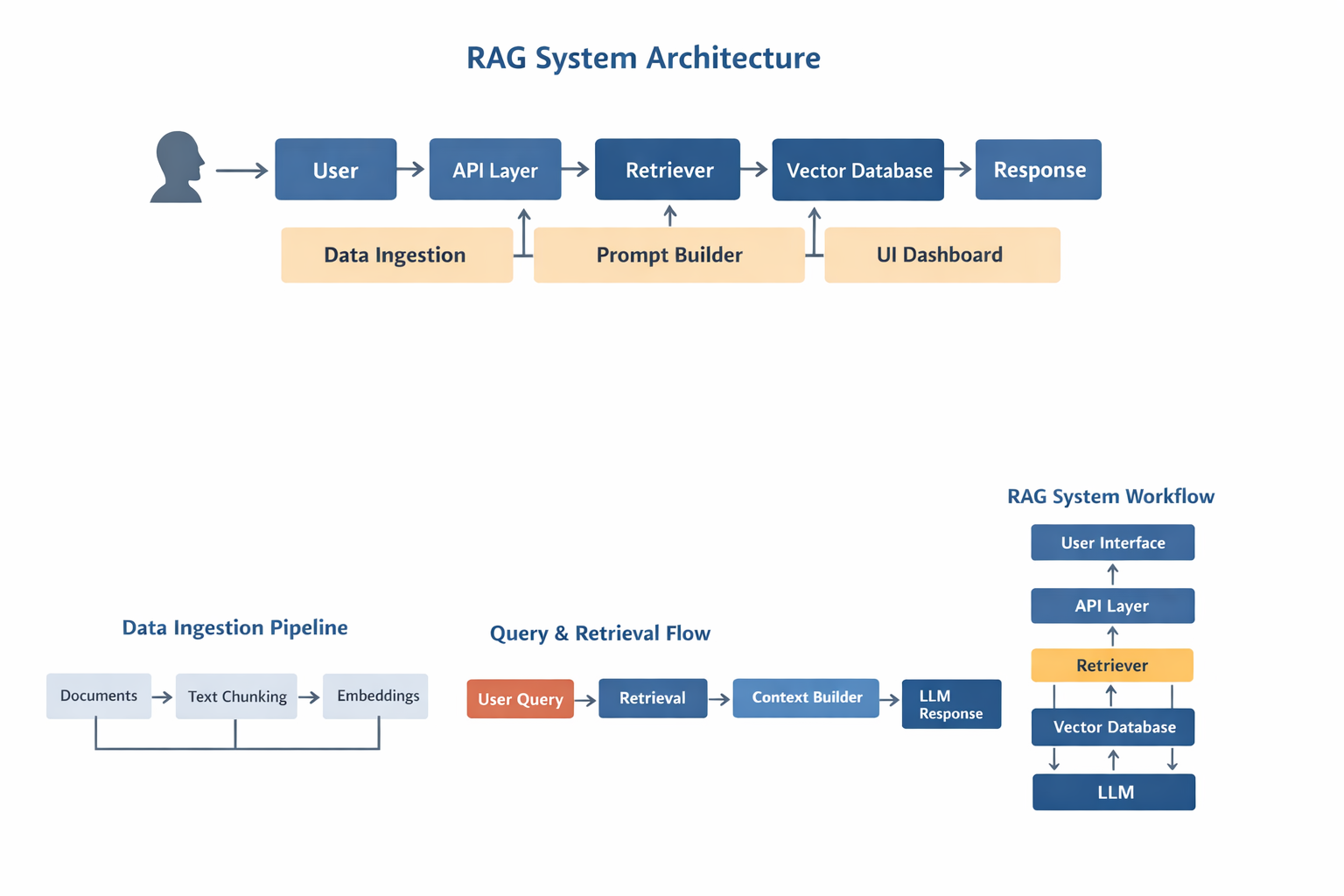
RAG System for Company Knowledge Base: 7 Powerful Architecture Tips for SMB AI Systems
Introduction A RAG system for company knowledge base allows businesses to use AI with internal documents, SOPs, emails, and databases without training a custom model.Instead of storing knowledge inside the model, a RAG architecture retrieves relevant information at runtime and sends it to the LLM. This approach is becoming the standard for SMBs building internal […]